



Starting July 1, 2026, the Netherlands will implement a truck toll. From that moment on, truck owners will pay a fee per kilometer driven. This new kilometer-based charge for trucks is already raising questions for many companies. What does this mean for your transport costs, rates, and deliveries?
By making preparations in time, you can prevent delays, extra administration, and unexpected costs. Van Thiel Transport actively monitors developments regarding the truck toll and ensures that vehicles are equipped with the correct toll boxes and administration on time.
What changes with the truck toll from July 1, 2026?
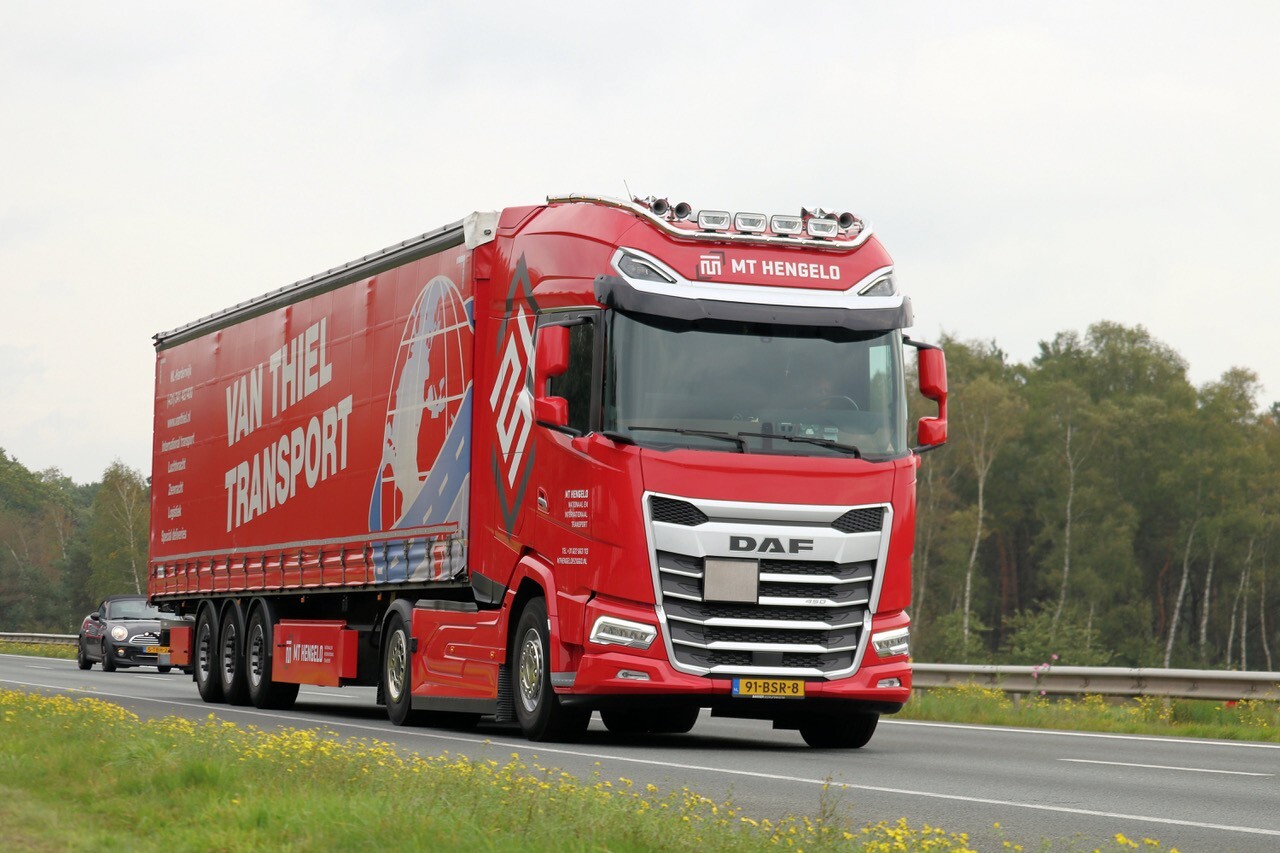
From July 1, 2026, truck owners in the Netherlands will pay a levy per kilometer driven. The regulation applies to Dutch and foreign trucks in categories N2 and N3 with a technical maximum mass of more than 3,500 kilograms.
The truck toll applies to:
- Virtually all motorways
- A number of provincial roads
- Specific municipal roads
Additionally, every truck must be equipped with a working toll box suitable for use in the Netherlands before July 1, 2026.
What determines the cost of the truck toll?
The rate of the truck toll depends on several factors, including:
- The technical maximum mass of the vehicle
- The CO2 emission class
- In some cases, the Euro emission class
The cleaner and lighter the vehicle, the lower the rate per kilometer.
Simultaneously, other regulations will change:
- The Eurovignette will be discontinued in the Netherlands as of July 1, 2026.
- Motor vehicle tax for trucks up to 12 tons will be abolished.
- For heavier trucks, this tax will be reduced.
What does the truck toll mean specifically for companies purchasing transport?
For companies purchasing transport, this means that kilometer costs will soon be directly passed on in transport rates. Transport rates currently often consist of fixed components. With the truck toll, routes, vehicle type, and emission class will become more decisive for transport costs.
Additionally, companies may face:
- Adjusted tariff structures
- Changes in surcharges
- Increased administration regarding kilometer registration and costs
- More focus on efficient routes and planning
This is exactly why clear communication about rates, planning, and changes becomes more important, ensuring you do not face unexpected costs and delays.
Why is the Netherlands introducing the truck toll?
The Netherlands is introducing the truck toll to make transport more sustainable and to align with systems in countries such as Belgium and Germany. Additionally, the regulation is intended to contribute to:
- Reduction of CO2 emissions
- Encouraging the use of cleaner vehicles
- A level playing field between Dutch and foreign hauliers
For international transport, similar toll charges have been common for a long time. Therefore, companies must prepare their administration, transport agreements, and vehicles in time.
Will transport rates increase due to the truck toll?
Although the final rates are still being finalized, it is clear that the truck toll will influence future transport costs. The vehicle type, routes, and emission class will determine the final costs of your transport.
For this reason, many carriers are currently not communicating specific percentages. The definitive rates have not yet been established.
Why preparation for the truck toll is already important
Many preparations must be made before the introduction of the truck toll. Consider, for example:
- Choosing a toll provider
- Installing suitable toll boxes
- Administrative preparation
- Adjusting transport agreements
If a toll box or registration is not arranged on time, trucks may experience delays, or you could face additional costs. This is precisely why being well-prepared is essential.
How Van Thiel Transport is preparing for the new kilometer charge
At Van Thiel Transport, we are actively following developments regarding the truck toll. Currently, the final rates are still being worked out, but we believe it is important to inform customers based on facts and clarity.
We are also busy with the upcoming changes. Therefore, we are equipping our vehicles with suitable toll boxes in a timely manner and closely following changes in legislation.
Want to be prepared for changes in your transport due to the truck toll?
Would you like to know what the truck toll might mean for your transport costs or current transport agreements? Van Thiel Transport is happy to think along with you about the impact on your logistics and will inform you as soon as there is more clarity regarding the final rates.
Frequently Asked Questions about the Truck Toll
The truck toll will take effect on July 1, 2026.
The toll applies to trucks in categories N2 and N3 with a technical maximum mass of more than 3,500 kilograms.
The truck toll applies to virtually all motorways and a number of provincial and municipal roads in the Netherlands.
Yes. Every truck covered by the regulation must be equipped with a working toll box suitable for the Netherlands before July 1, 2026.
The rate is determined by, among other things:
- The technical maximum mass;
- The CO2 emission class;
- Sometimes the Euro emission class of the vehicle. The cleaner and lighter the truck, the lower the rate per kilometer.
The government has already shared information about the setup of the truck toll, but definitive rates are still being finalized. Therefore, many carriers are not yet communicating concrete cost increases or percentages.
Yes. The Eurovignette will stop in the Netherlands on July 1, 2026, coinciding with the introduction of the truck toll.
The truck toll will influence transport rates. The final costs will vary based on route, vehicle type, and emission class.
Companies purchasing transport will likely face adjusted transport rates and extra administration regarding costs. If administration or registration is incorrect, it can lead to delays and extra costs.
Van Thiel Transport is preparing by equipping vehicles with suitable toll boxes, actively monitoring legislation and rates, and informing customers in a timely manner about relevant changes.